• Vladimir Kuzmenko
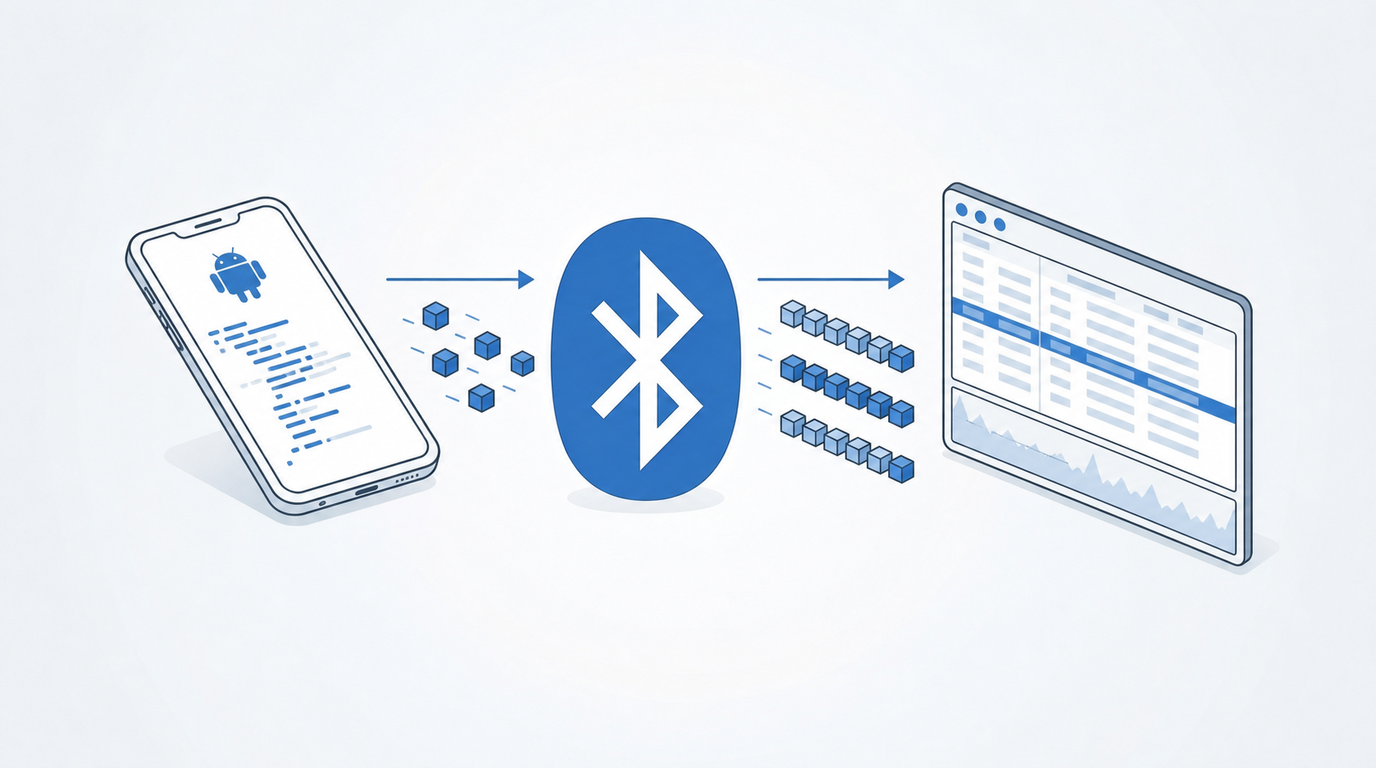
Reading BLE Traffic in Wireshark: From Android Code to ATT Packets
Map one Android BLE session from connectGatt() to disconnect() across API calls, callbacks, and HCI or ATT packets in Wireshark.
Read post arrow_forwardWe publish lessons learned from building production apps, shipping features under real constraints, and helping teams move faster with confidence.
Map one Android BLE session from connectGatt() to disconnect() across API calls, callbacks, and HCI or ATT packets in Wireshark.
Read post arrow_forward
Teams inheriting a legacy .NET mobile app frequently do not know which Xamarin flavour they have — and the two lead to completely different migrations, with different destinations, different tooling and different costs. Getting it wrong costs a quarter. This is a five-minute diagnostic with runnable commands that settles it definitively, then routes you to the right path.
Read post arrow_forward
Most articles about Xamarin store deadlines are written as though the deadline is coming. It is not. Apple stopped accepting Xamarin-built binaries in April 2025 and Google Play stopped accepting Xamarin updates in August 2025. If you are still on Xamarin today, you are already unable to ship — and on 31 August 2026 your published Android app becomes invisible to new users on modern devices. Here is the honest state of play and what you can still do.
Read post arrow_forward
MvvmCross is not abandoned — it shipped .NET 10 support and targets current iOS and Android monikers. The real situation is more interesting than the obituary you might expect. It is effectively a one-maintainer project, and version 11 deletes the IoC container, the static service locator, the Setup model and the plugin system that enterprise apps are built on. Teams face a rewrite whether they stay or leave. Here is how to think about which one.
Read post arrow_forward
Almost everything published about leaving Xamarin assumes you are on Forms and heading to .NET MAUI. If your app started as Xamarin.iOS or Xamarin.Android, that advice is wrong for you. Your destination is .NET for iOS and .NET for Android, your storyboards and AXML layouts carry over untouched, and there is no supported automated tooling. Here is what the job actually consists of — including the one breaking change that compiles cleanly and fails at runtime.
Read post arrow_forward
Teams migrating from Xamarin.Forms scope iOS and Android carefully and treat Windows as a free checkbox, because .NET MAUI lists it as a supported target. It is not free. MAUI pins its Windows App SDK version, you cannot raise it yourself, and a routine dependency bump has already made at least one app unpublishable to the Microsoft Store. Here is how to scope the Windows head honestly, and when to decide it is not worth shipping.
Read post arrow_forward